

Politics
PFD
1. The 2016 Economic Crisis and Executive Intervention
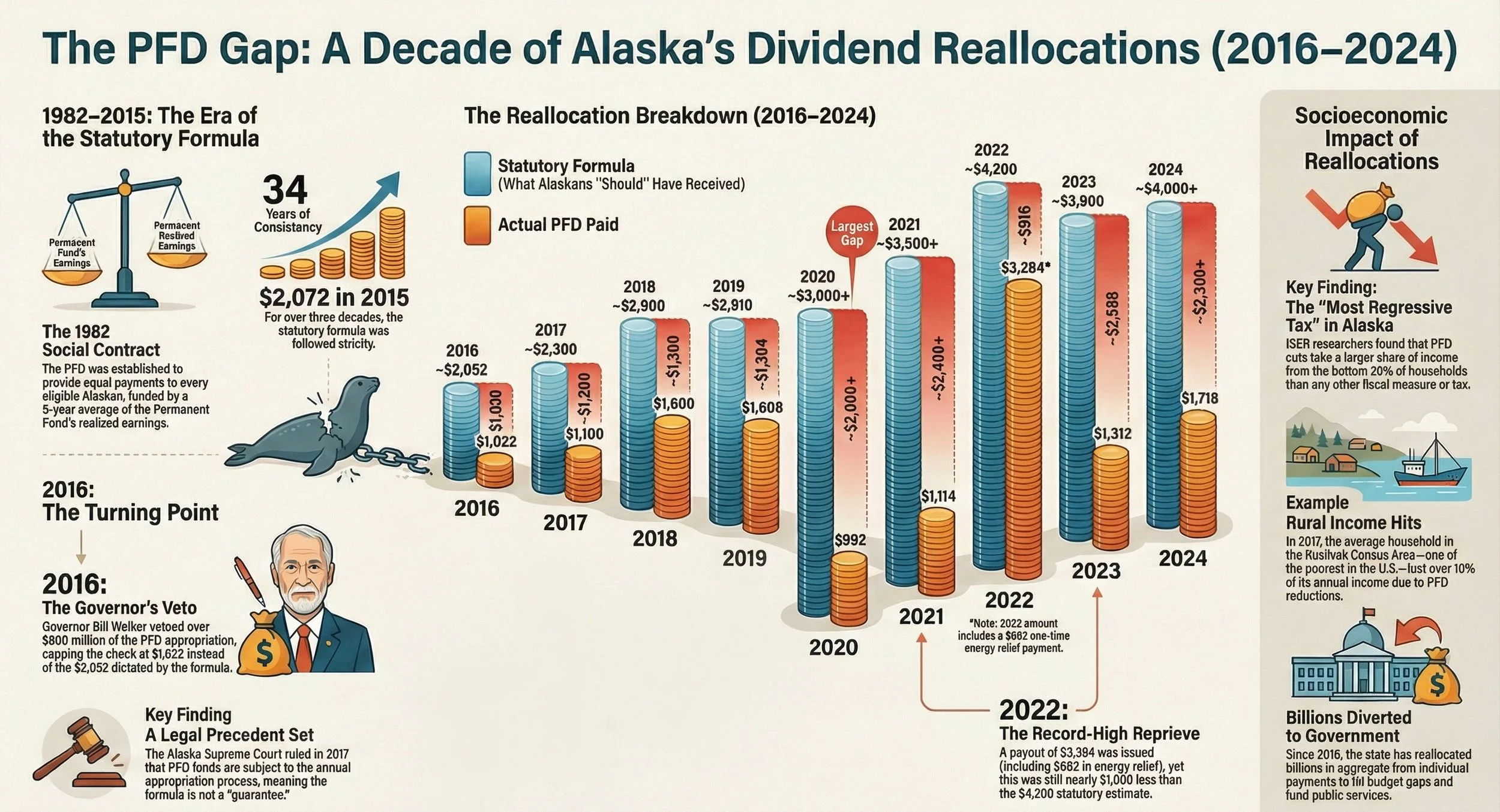
The 2016 fiscal year marked a severe economic crisis for Alaska, driven by plummeting global oil prices and historically high state spending. Facing a massive revenue shortfall, an impending loss of over 14,000 private-sector jobs, and the highest out-migration rates since the 1980s, the Walker administration chose to fundamentally alter the state's financial approach.
Prioritizing State Operations: To protect roughly 16,000 state worker positions and maintain government stability, the Governor utilized a controversial line-item veto to heavily reduce the Permanent Fund Dividend (PFD).
Breaching the Social Contract: This executive intervention was framed as a painful necessity to avoid deep agency cuts, but it effectively prioritized the preservation of the state bureaucracy over the direct distribution of resource wealth to residents.
3. Long-Term Policy Implications and the PFD Debate
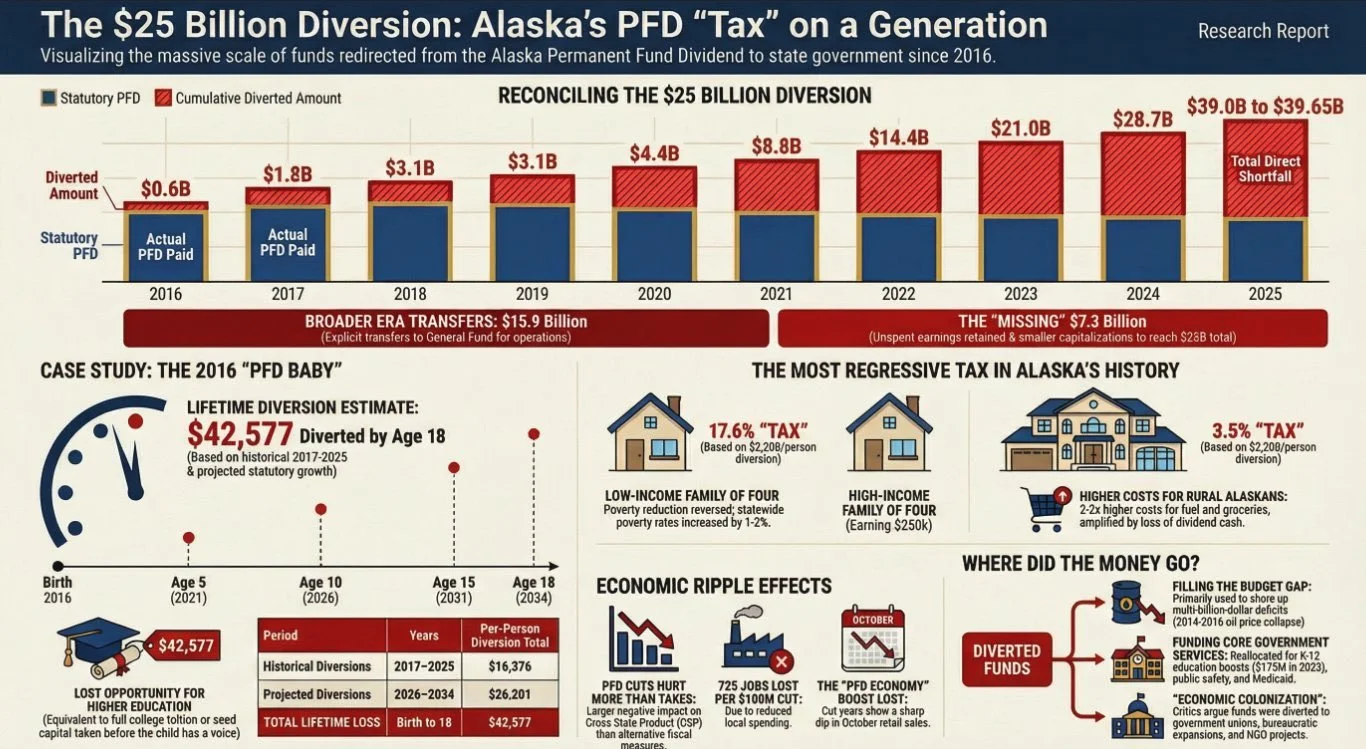
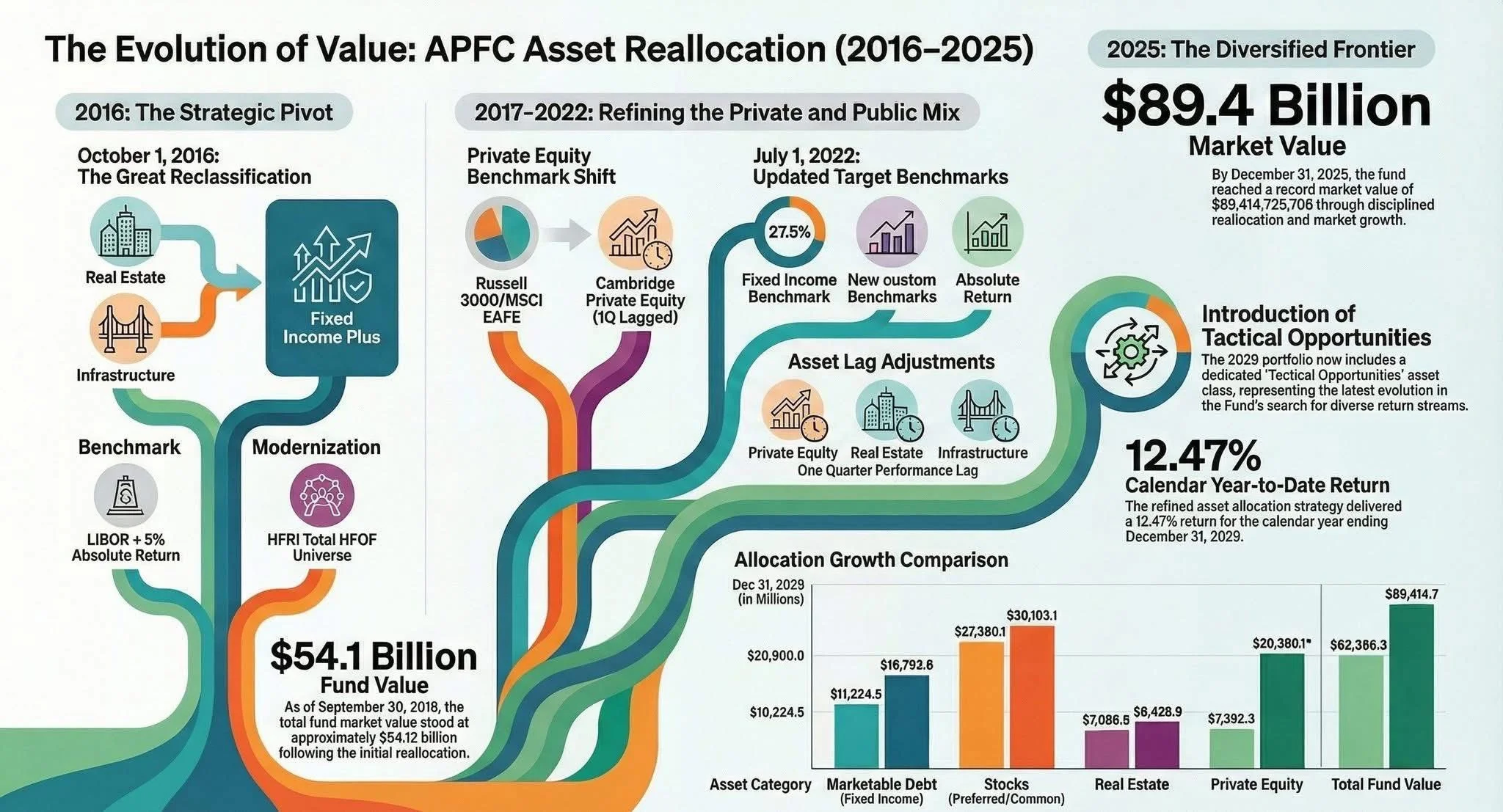
The 2016 veto permanently transformed the Alaskan fiscal landscape by shifting the PFD from a protected "statutory" formula to a discretionary "appropriated" fund. This established the precedent for the current era, where the Permanent Fund is treated as the primary revenue engine to fund government operations, allowing the legislature to balance budgets without the political fallout of broad-based taxes.
This systemic squeezing of the dividend has shifted the burden of state deficits directly onto residents, sparking a deep and ongoing ideological divide over Alaska's resource wealth:
The "Welfare" Perspective: Critics of the traditional PFD view the dividend as an unearned payment that discourages government fiscal discipline and limits the funding of essential public services.
The "Theft" Perspective: Defenders of the statutory formula argue the reduction acts as a regressive tax on families and constitutes a theft of resource wealth that was specifically designed to be kept out of the hands of politicians.
2. Financial Impact and Transparency Discrepancies
Historically, the PFD was a protected statutory right calculated by a strict formula based on investment earnings. By treating the dividend as a discretionary tool to patch the budget deficit, the administration "garnished" approximately $700 million from the distribution pool.
PFD TypeAmount per Eligible ResidentEnacted PFD (Actual Payout)$1,022.00Calculated Statutory PFD~$2,022.00
This executive action cost every eligible Alaskan over $1,000, redirecting personal wealth to the general fund. Compounding public frustration was a significant lack of budgetary transparency. While the Governor's office claimed a reduction of $150 million in spending to justify the dividend cuts, the Legislative Finance Division (LFD) revealed a starkly different reality:
Unrestricted General Fund (UGF) spending was actually proposed to increase by $228 million.
The administration continued to authorize massive payouts for high-level consultants (ranging from $100,000 to $120,000 per month), severely undermining their narrative of strict fiscal austerity.